Tag: Air Conditioning

Air conditioning (often referred to as AC, A/C, or air con) is the process of removing heat and moisture from the interior of an occupied space to improve the comfort of occupants.

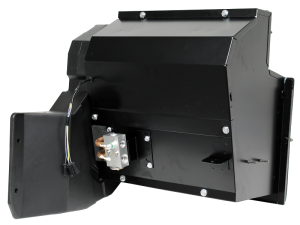
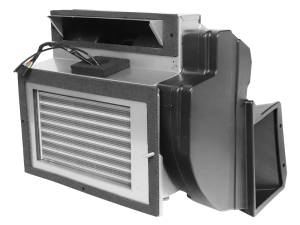
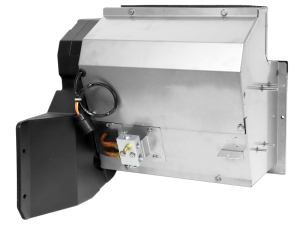
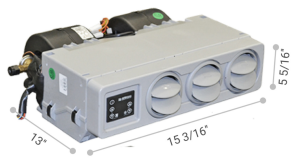
Kenworth HVAC Assembly

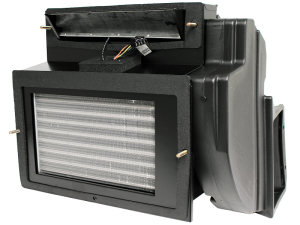
The Kenworth evaporator box or HVAC assembly houses the truck’s A/C Evaporator , Heater core, Expansion valve, Thermostatic Switch, Electronic Actuated Fresh Air Door, high-flow SPAL blower motor and a Receiver Drier (where applicable).
OEM plastic boxes often crack or fail over time, many owners upgrade to heavy-duty aftermarket units.

Kenworth HVAC Assembly houses the truck's A/C Evaporator , Heater core, Expansion valve, Thermostatic Switch, Electronic Actuated Fresh Air Door, high-flow SPAL blower motor and a Receiver Drier (where applicable). Kenworth HVAC Assembly houses the truck's A/C Evaporator , Heater core, Expansion valve, Thermostatic Switch, Electronic Actuated Fresh Air Door, high-flow SPAL blower motor and a Receiver Drier (where applicable).

Stainless Steel Upgrades: Many replacements are constructed from stainless steel to prevent rust, stop condensation leaks, and improve long-term durability. 

Fitment: : Kenworth models including T300, T600, T660, T800, W900, W900B, W900L with Day Cabs and Sleeper trucks.

Common OEM Cross-References: F31-1036-1, F31-1037-1, F31-1064-11122, F31-1064-12101, F31-1072-11120, F31-1220-11112, F31-1220-11122, F31-1220-12101, F31-1221-11110, K142-465-1 and K142-535-1.


Optional Stainless Steel finish
Kenworth HVAC Assembly houses the truck's A/C Evaporator , Heater core, Expansion valve, Thermostatic Switch, Electronic Actuated Fresh Air Door, high-flow SPAL blower motor and a Receiver Drier (where applicable). Kenworth HVAC Assembly houses the truck's A/C Evaporator , Heater core, Expansion valve, Thermostatic Switch, Electronic Actuated Fresh Air Door, high-flow SPAL blower motor and a Receiver Drier (where applicable).


Individual replacement components are also available.

Arctic Traveler Canada is the industry leader for replacement Mobile HVAC parts & systems in the Canadian marketplace. We specialize in offering HVAC solutions for automotive, light duty, heavy duty, off highway, agricultural & mining. Call 1-800-295-4156 for more info.

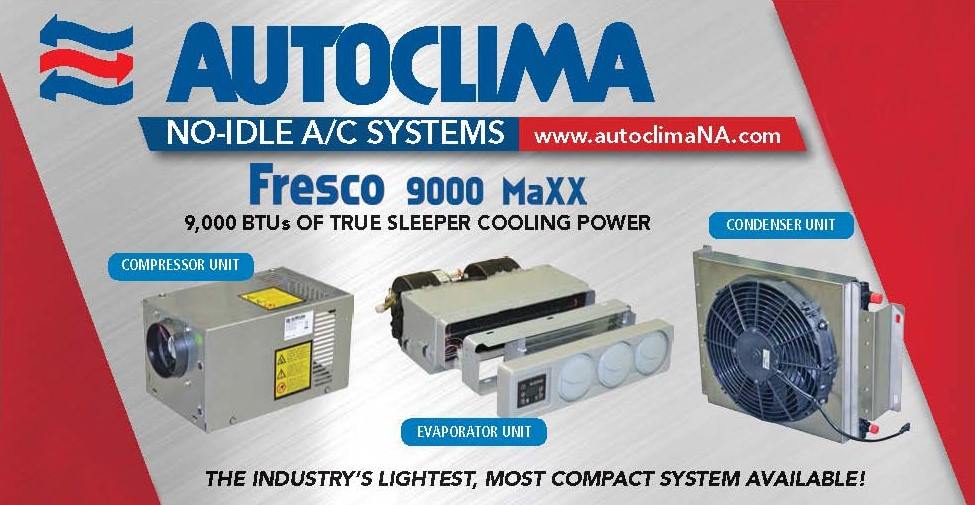
Autoclima Fresco 9000

Systèmes de climatisation pour véhicules utilitaires et industriels

AUTOCLIMA est depuis plus de 50 ans à l’avant-garde de la conception et de la fabrication de systèmes de climatisation haut de gamme pour véhicules. Conscient de la nécessité d’une solution innovante, Autoclima a développé un système de climatisation révolutionnaire qui fonctionne même lorsque le moteur est éteint. Cette innovation réduit non seulement les émissions de CO2, mais permet également d’économiser du carburant et de renforcer la sécurité routière en permettant aux conducteurs de se reposer.


Le Fresco 9000 est un système de climatisation de pointe, alimenté par batterie et sans ralenti, conçu pour être la solution la plus efficace actuellement disponible pour les camions. Il élimine le besoin de diesel, réduit les coûts d’exploitation avec un minimum d’entretien et assure aux conducteurs confort et repos sur les longs trajets.

ÉVAPORATEUR
• Unité à monter sur armoire ou étagère avec affichage numérique facile à lire
• Compact et léger : 14 cm x 39 cm x 33 cm (H x L x P) 5 kg
• Installation en hauteur dans la cabine, transformant l’air chaud de la cabine en air froid et sec
• Réglage de la température par le pilote ; le système maintient automatiquement la température • Diagnostics système intégrés

Le système no-idle fonctionne sans moteur, maintenant une température agréable et optimale dans l’habitacle. Cela contribue à réduire la consommation de carburant et les émissions polluantes. De plus, il améliore le confort du conducteur, qu’il conduise ou fasse une pause.

COFFRET COMPRESSEUR
• Compresseur Scroll. Compact : 21,6 cm x 21,9 cm x 36,5 cm (H x L x P) – 11,8 kg.
• S’installe facilement sous la couchette.
• Utilise moins d’espace sous la couchette que les systèmes concurrents.

L’alimentation provient de batteries auxiliaires indépendantes des batteries de démarrage du camion et assure 8 à 10 heures de refroidissement avec une charge complète. Avec un minimum de composants et seul le condenseur exposé aux intempéries, la fiabilité est accrue et la garantie est de 4 ans.

CONDENSEUR
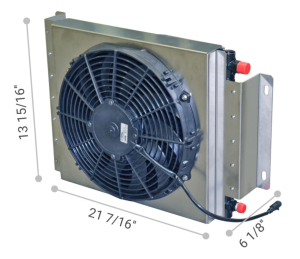
• Condenseur en aluminium monté sur un support de montage en acier inoxydable
• Compact : 34 cm x 55 cm x 15 cm (H x L x P) – 6,8 kg
• Installation en hauteur sur la paroi arrière extérieure de la cabine pour une performance optimale
• Grande durabilité = longue durée de vie


Principales caractéristiques et avantages

– Le fonctionnement sans ralenti permet d’économiser des centaines de litres de diesel par mois.
– Les matériaux résistants à la corrosion garantissent une durabilité accrue.
– Compatible avec tous les modèles de camions.
– Sa conception compacte permet une installation facile dans n’importe quelle cabine de camion.
– La garantie de 4 ans offre tranquillité d’esprit et protection à long terme.

Pour en savoir plus, appelez Remco Air au 1-888 359-3366 pour plus de détails.

télécharger la brochure ici


Conversion of R-134A to R-1234YF

Conversion from R134A to R1234YF

An Update on the Future of Refrigerant – R-134A to R-1234YF from RedDOT.

The conversion from R-134A to R-1234YF has everything to do with increasing concerns about the environmental impact of these refrigerants. Three decades ago, R-12 was the industry standard. It was found to cause a depletion of the ozone layer, so R-134a was adopted since it did not contribute to ozone depletion. This solved the problem…or so we thought. 

Several years later, it was concluded that many man-made gases were contributing to global warming, and R-134a was one of those contributors. A search for a refrigerant that is both friendly to the ozone layer and doesn’t contribute to global warming was started. R-1234yf solves both of those problems.

The transition away from R-134a refrigerant continues to be a key focus for the heavy-duty vehicle industry as we work toward reducing greenhouse gas emissions. While R-134a remains approved for off-highway applications, its phase-out for newly manufactured vehicles is on the horizon. By 2028, all newly produced off-highway vehicles will no longer use R-134a, marking a significant shift in mobile HVAC systems. 

Note – R134a and R1234yf are NOT interchangeable

Conversion of R134A to R1234YF. refrigerant charging ports for Mobile HVAC systems.

The EPA originally approved R-1234yf for use in passenger cars at the end of 2020, and since then, it has fully replaced R-134a in that market. However, R-1234yf is not yet approved for Class 6, 7, and 8 trucks. The EPA currently has an application under review for its approval in these larger vehicle classes. Once approved, this transition will play a vital role in reducing the environmental impact of mobile HVAC systems. For context, R-134a has a Global Warming Potential (GWP) of 1,430, whereas R-1234yf has a GWP of only 4. Additionally, while R-134a remains in the atmosphere for around 13 years, R-1234yf breaks down in just 11 days, significantly reducing its environmental footprint. 

The good news is that both refrigerants perform very similarly in mobile HVAC applications, but R-1234yf offers a clear environmental advantage. 

What Technicians Need to Know

  • Newer systems have very small capacities and are much less prone to leakage. This means that technicians need to take care not to overcharge the system. Many OEMs recommend service only every three years. The days of an annual top-off are over.
  • Newer systems require newer equipment to service them. Refrigerant recovery machines must comply with the latest regulatory standards and are to be operated only by licensed technicians. These machines can detect which type of refrigerant is present. Refrigerant types are not to be mixed. 
  • The usage of dyes and sealants is discouraged. Dyes and sealants are considered contaminants and will reduce the performance and longevity of the lubricant. Use refrigerant sniffers for leak detection and repair leaking equipment per SAE and EPA guidelines.
  • BG Frigi-Quiet® for R-1234f, PN 702, is not approved for use in HEV or EV vehicles. These vehicles require the use of lubricants that pass proprietary electrical insulation performance standards, which PN 702 does not possess.

This change in automotive refrigerant technology has been the talk of the industry for several years. 
R-1234yf will be the industry standard for the foreseeable future. As the industry prepares for these regulatory changes, we encourage customers to stay informed and take advantage of resources like the Mobile Air Climate Systems Association (MACS), which offers a comprehensive certification program on its website.

For more information on Air Conditioning, Filtration & Pressurization, Heating  or Refrigeration, call the mobile HVAC specialist Arctic Traveler Canada at 800-295-4156.

More Tech tips
AC Preventative Maintenance 

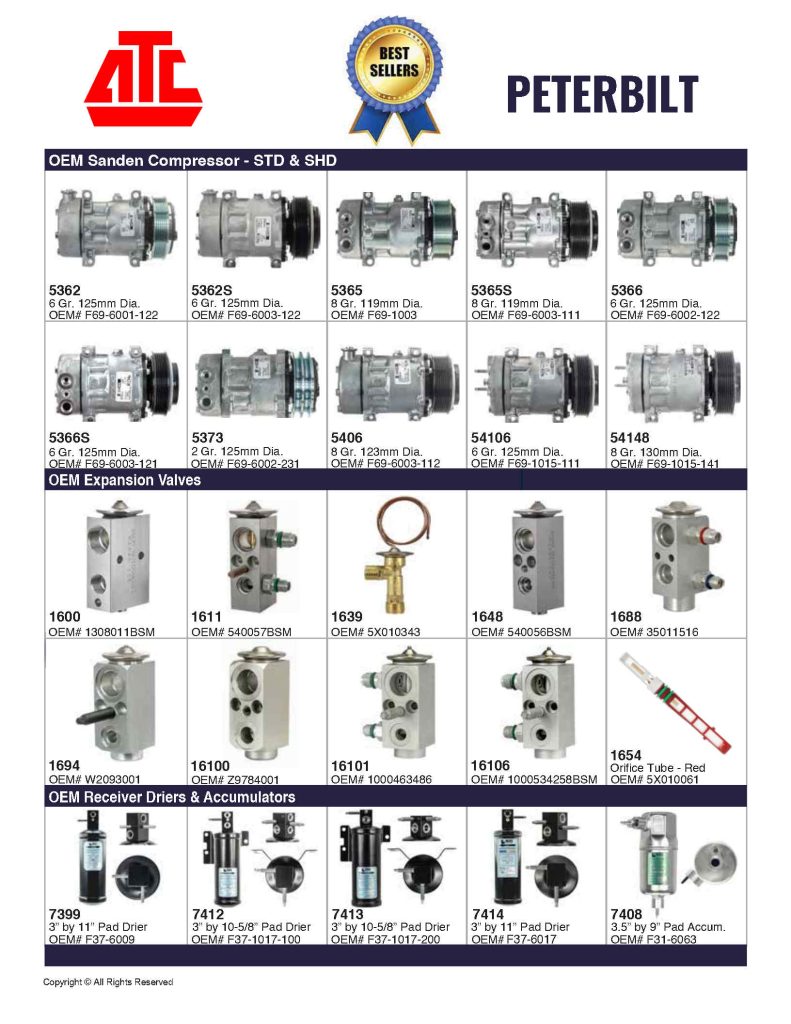
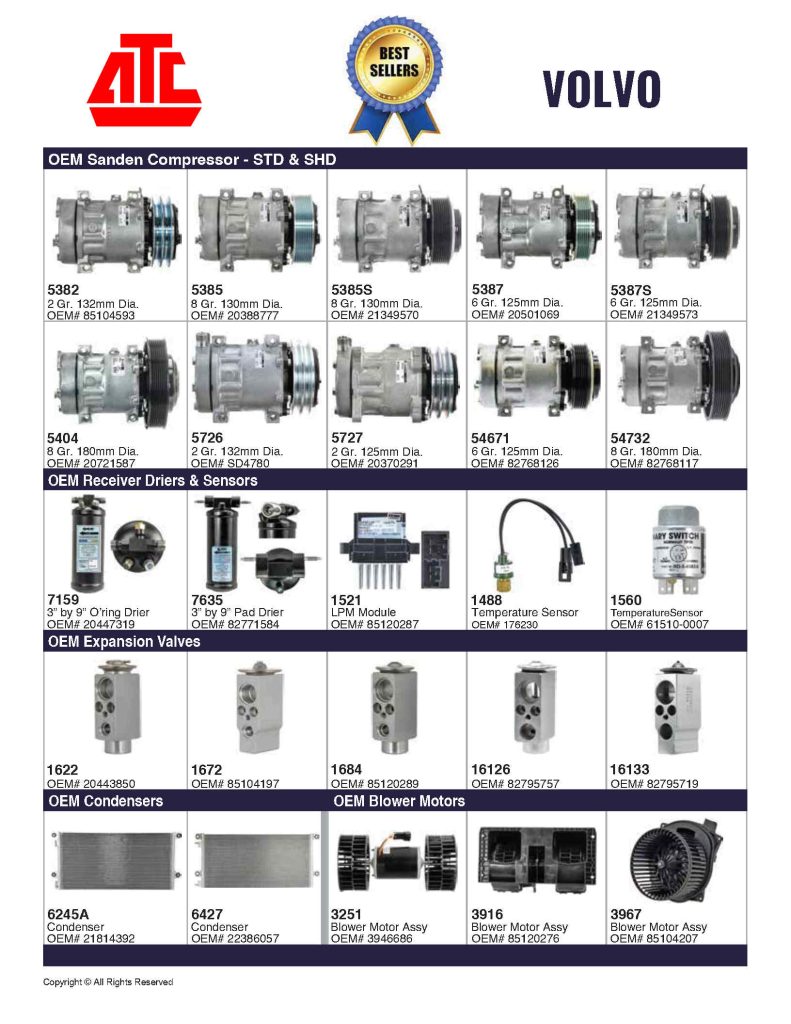
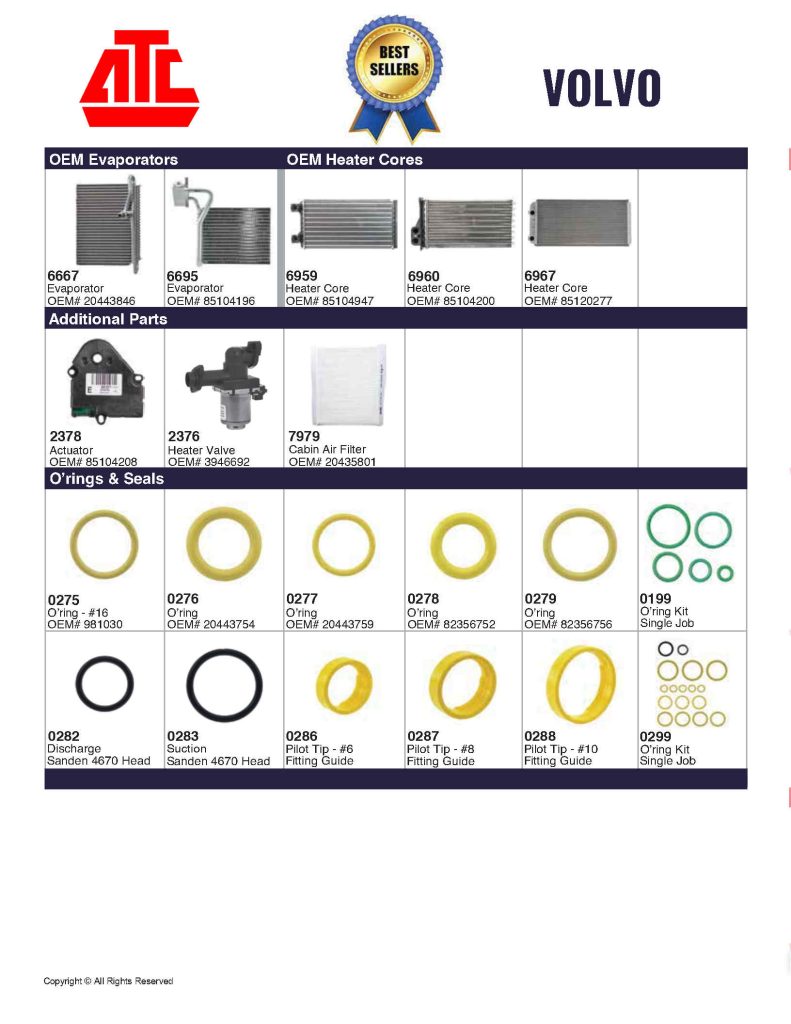
Best Selling Mobile HVAC Parts By Make
Spring HVAC Tech Tips

On YouTube

How To and Which Components to Inspect 
Basic A/C Troubleshooting.

Best Selling Mobile HVAC parts by Make

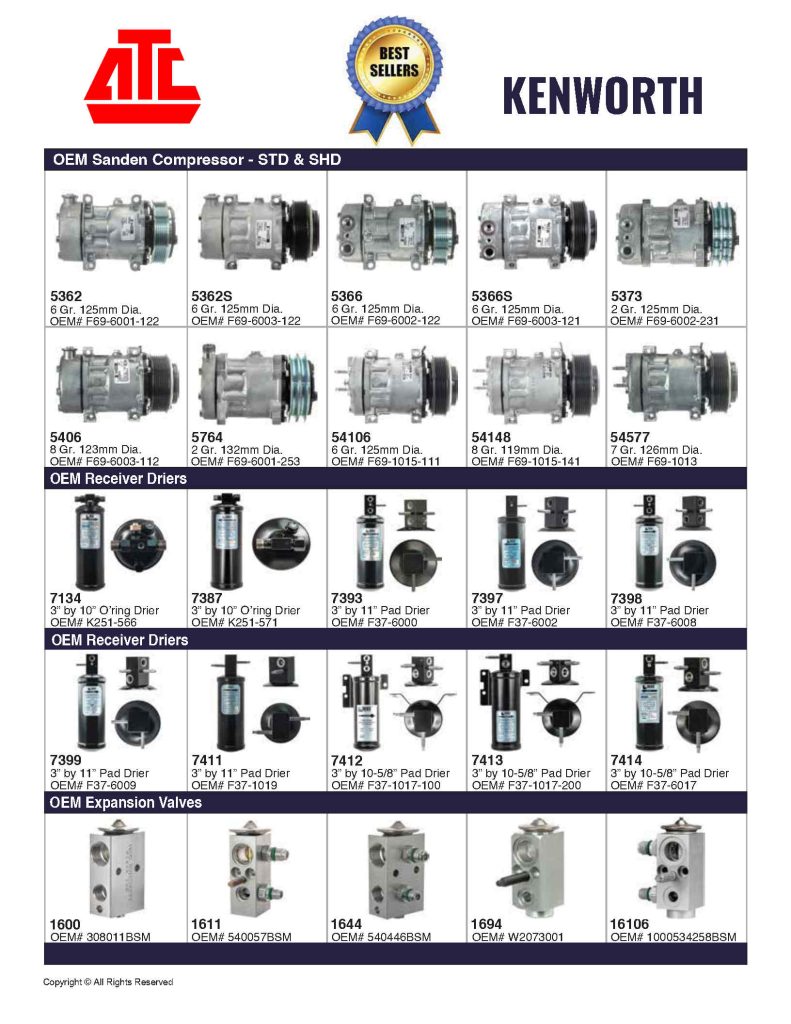
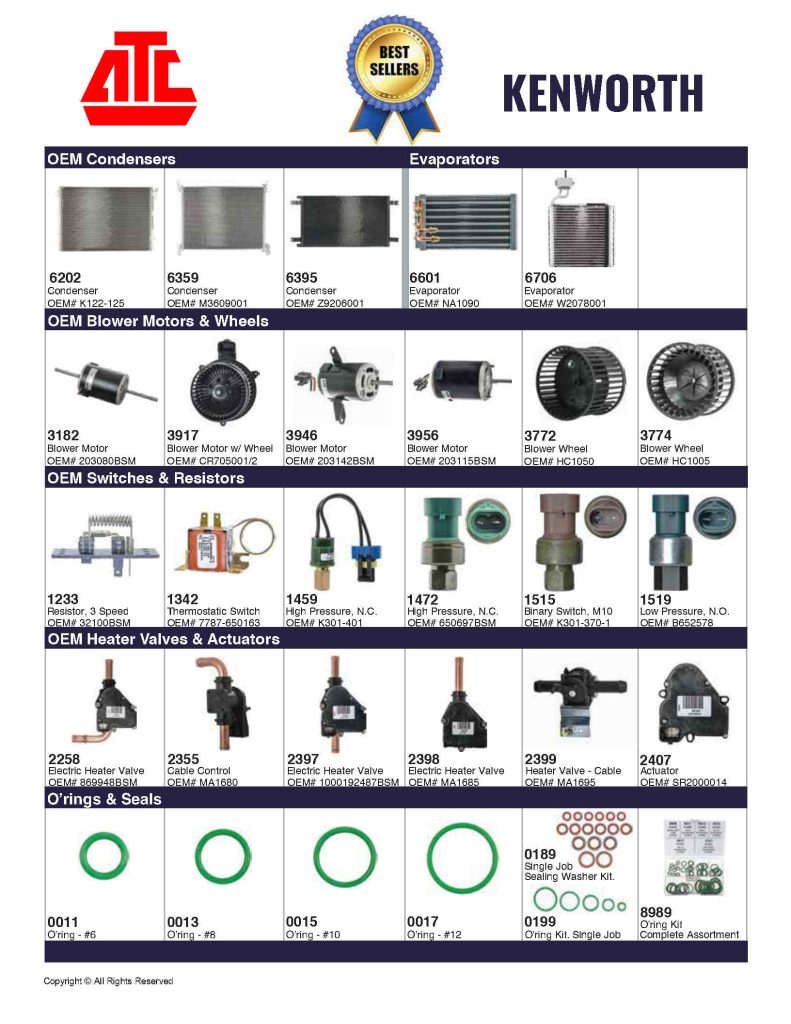
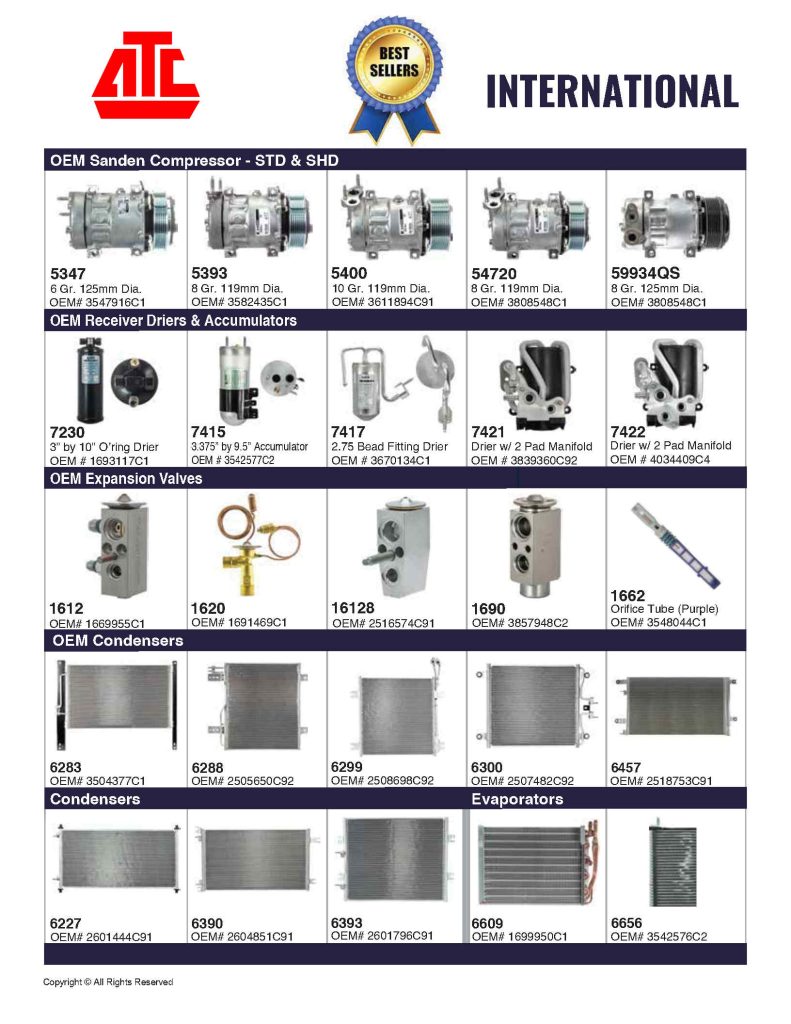
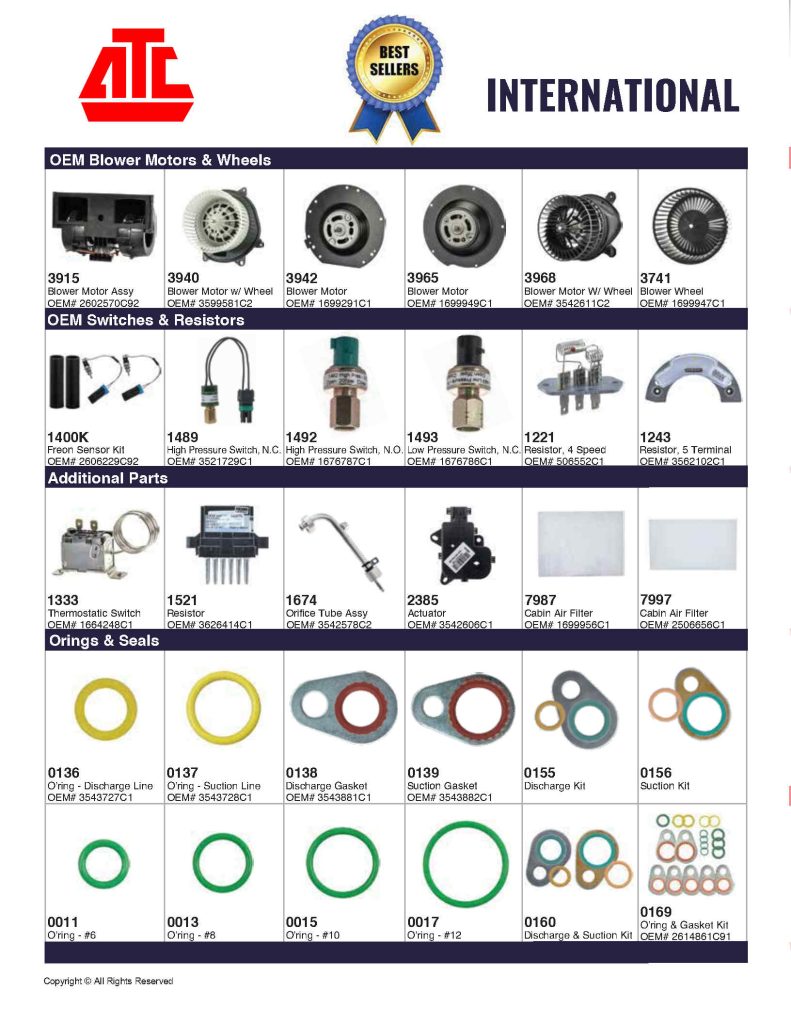
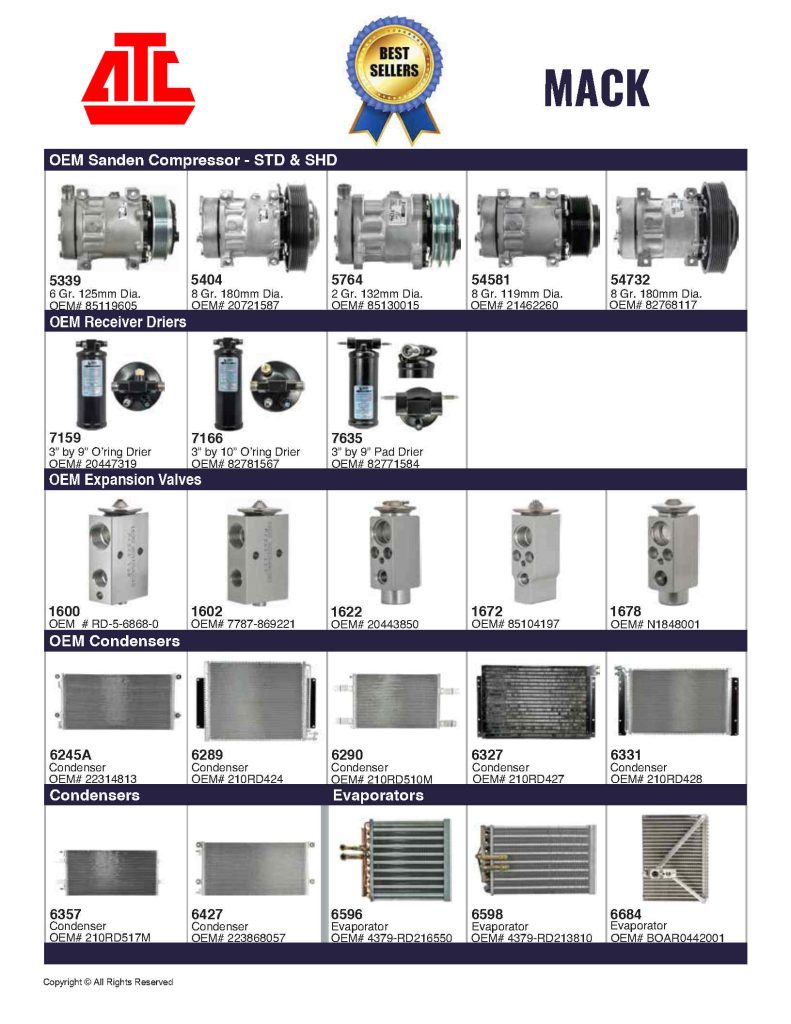
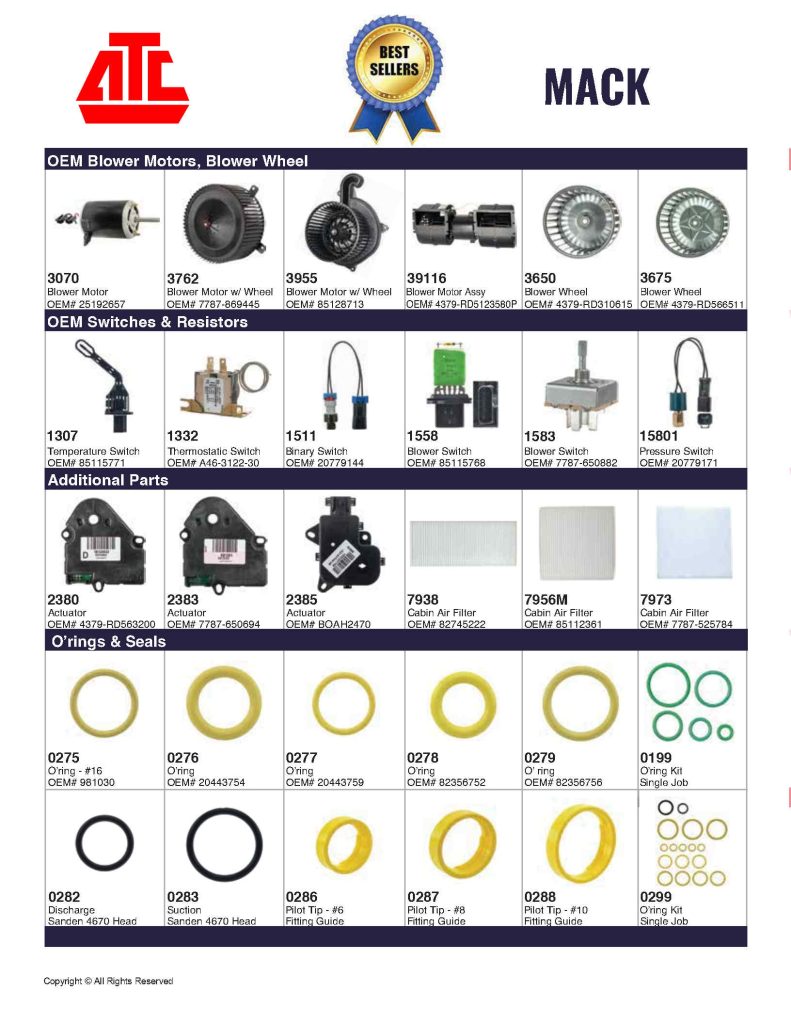
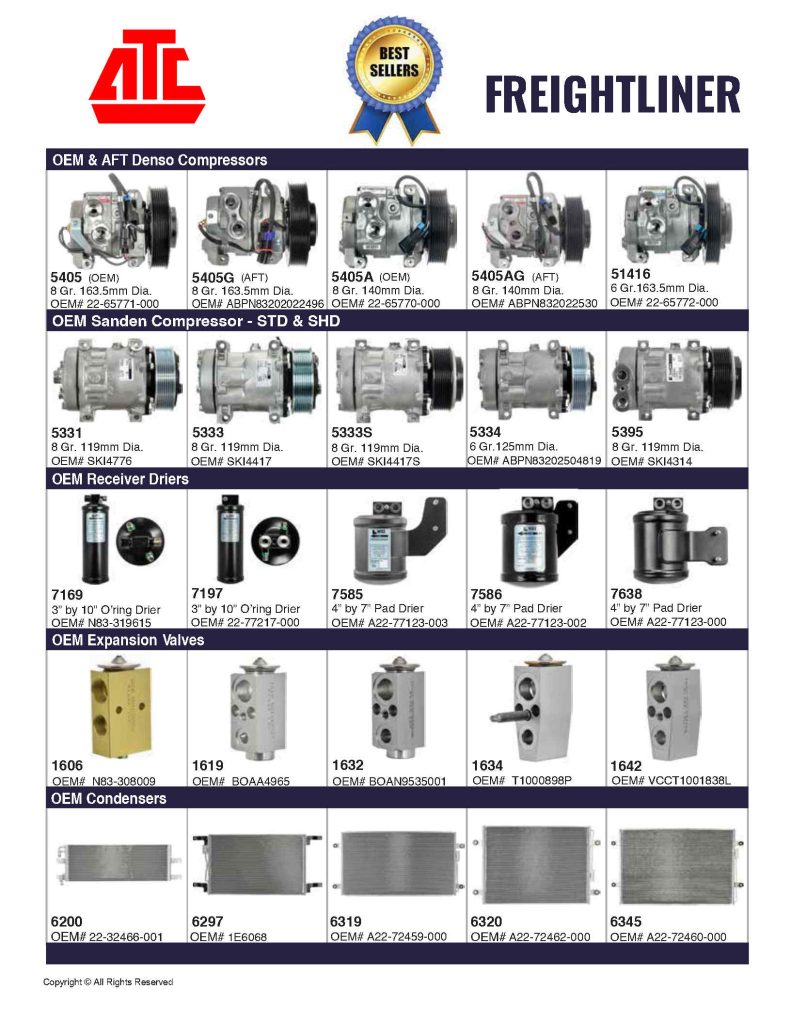
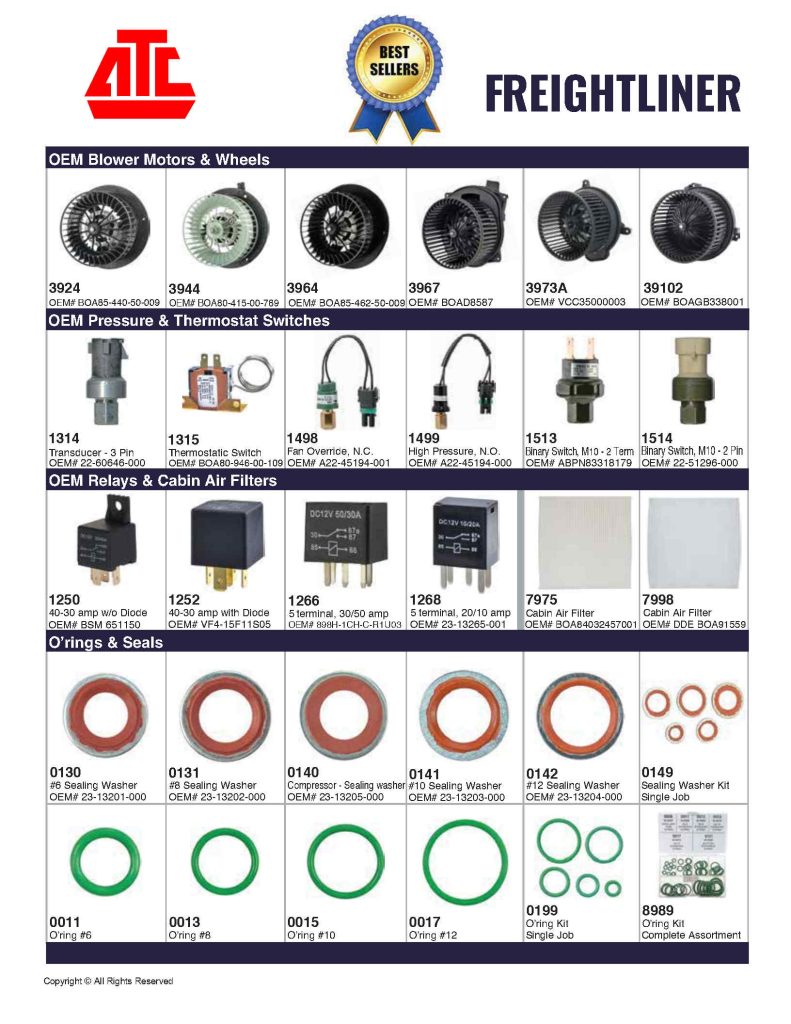
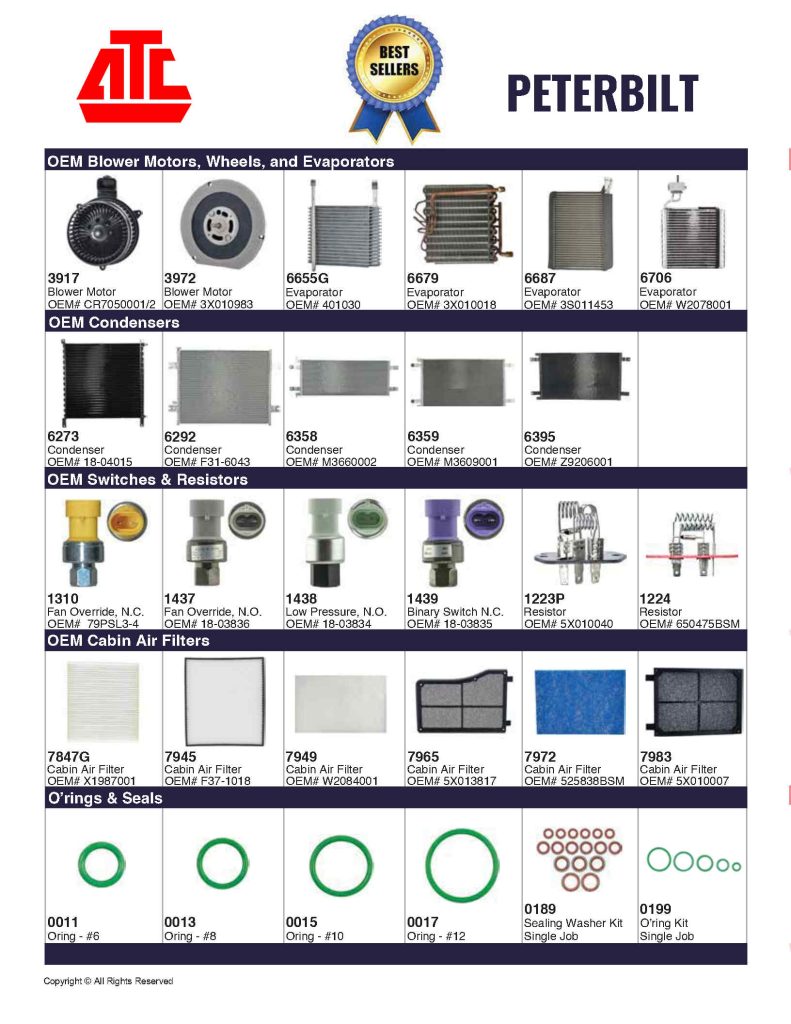
Need HVAC parts for Freightliner, Kenworth, International, Peterbilt, Sterling, Volvo, Western Star and more!
Having the right part is paramount to getting the job done right and to help with your choice, we offer Best Selling Mobile HVAC parts by make featuring Denso, Sanden & York Compressors, Clutches, Condensers, Expansion Valves, Receiver Driers and so much more. 

We’re the source for all your HVAC products for Heavy Duty, Medium Duty, Off-Road, Agriculture and Buses.
We manufacture and distribute an extensive line of high-quality original equipment from industry-leading brands and aftermarket HD HVAC parts and supplies for Any Truck, Any HVAC System or Any HVAC Part.
Call 800-295-4156 for more details. 

Engineered HVAC Products

Engineered HVAC products are designed and built for air conditioning, heating, ventilation, air filtration & cab pressurization solutions for heavy duty equipment. We offer a variety of products from individual components parts like Condensers, Hydraulic Compressors, Cab Pressurizers, Evaporators & Heaters to self-contained systems with a wide range of HVAC solutions for Commercial and Industrial applications in Agricultural, Construction, Forestry, Mining and Emergency Services. Our solutions are designed specifically for OEM’s, aftermarket use and built to provide reliable service in extreme conditions.
View the full catalog here https://atc.ca/product-lines/omega/ or contact us for more info.

Engineered HVAC parts for heavy duty equipment like Condensers, Hydraulic Compressors, Cab Pressurizers, Evaporators & Heaters.

Engineered  HVAC products

Engineered HD HVAC products from ATC are an innovative line of heating, ventilation, and air conditioning equipment. These products are designed specifically for heavy-duty applications. Unlike standard HVAC systems intended for homes or small businesses, our engineered Heavy Duty HVAC products are built to withstand the demanding requirements of large commercial and industrial facilities.

These high-capacity HVAC systems are rugged and feature heavy-gauge steel cabinets, high-efficiency motors and compressors, and industrial-grade components selected for durability and performance under continuous operation. Dual refrigeration circuits allow for uninterrupted operation if one component fails to ensure redundancy. Programmable logic controllers monitor conditions and automatically optimize performance.

Our HD HVAC technology allows these systems to heat, cool, humidify, dehumidify, ventilate and filter air for the most optimal comfort and indoor air quality. Recommended applications include airports, hospitals, data centers, factories, warehouses, sports arenas; any large spaces with unique HVAC needs would be a good fit. Custom engineering ensures that the system is sized properly and designed for that facility’s specific layout, climate, occupancy, and expected usage.

Engineered HD HVAC products from ATC feature robust construction and customizable designs. These Heavy Duty HVAC systems deliver reliable climate control to meet the most demanding HVAC challenges. This advanced equipment keeps our customer’s large-scale facilities operating in peak condition year after year.


Other Engineered products
Air Filtration & Pressurization 
Compact Heater
Under-seat Heater

Omega Canada
is a proven and trusted specialist in mobile climate control. We engineer a wide range of HVAC solutions for Commercial and Industrial applications. Call  1-800-295-4156 to discuss what’s possible and let our experience be your guide.

SPRING HVAC Tech Tips from RedDOT

Spring HVAC Tech Tips to ensure your AC system and its components perform optimally. Spring has officially sprung and the shift from cold to warm weather can prove impactful to mobile HVAC systems. Following best practices will help to weather even the most extreme seasons and keep your AC systems operating optimally. Read on for some technical tips on maintaining system integrity.  
 

  1. Close your HVAC’s water valve 

During winter, many people will keep their water valves open as they use their heating system. An important part of the shifting weather is to ensure that your water valve is operational and closed. When left open, the system will emit warm air even when the A/C is turned on. 
 

  1. Check for refrigerant leaks 

Most HVAC systems haven’t had their A/C turned on for months because they’re just used for heat during the winter. If an A/C system sits idle for extended periods of time, it can lead to the system’s refrigerant leaking out of the face seal. To check for a refrigerant leak, look for traces of oil on the system’s fittings, or use an electronic leak detector and check the service ports and charge ports where the gauge set is attached. 

  1. Inspect compressor belts for wear and tear 

Since A/C compressor belts are made of rubber, with time and use they will begin to eventually wear and will need to be replaced. Be sure to check the belt for any cracks, abrasions or glazing that will indicate wear and tear. You should also check your compressor belt for proper tension because too much tension will put too much side load on the clutch bearings and cause a leak, whereas too little tension will cause the belt to slip and generate heat, burning off the belt or clutch. 

  1. Ensure proper airflow 

Air filters should be cleaned every time a vehicle undergoes an inspection to ensure proper airflow and the quality of air that an operator will be breathing. It’s also important for air inlets in the operator cab to remain free from obstructions. Air inlets are usually behind the driver’s seat and can be unintentionally covered up by the vehicle operator. If you put your lunch, dog, coat, etc. behind your seat, you may block the inlet and prevent your A/C from properly blowing air.     

For more information on Air Conditioning, Filtration, Heating & Pressurization, call the mobile HVAC specialist Arctic Traveler Canada at 800-295-4156.

More Tech tips
AC Preventative Maintenance 

How To Inspect an A/C Compressor
A/C Compressor Check Up
How To Troubleshoot your A/C Electrical system
Why Do a Winter time PM on your A/C System

On YouTube

How To and Which Components to Inspect 
Basic A/C Troubleshooting.

Diagnosis and Troubleshooting A/C Systems

Troubleshooting A/C systems can be done easily, if the proper components and steps are followed. A/C system performance is achieved with many components working together to provide cab comfort for the driver and passengers. The item that receives the most attention is the Compressor. The compressor operates as the “pump” of the system, keeping the refrigerant circulating and increasing the refrigerant’s pressure.

All compressors have two sides: Suction and Discharge. The refrigerant is drawn into the compressor’s suction side as a cold-low pressure vapor and then is compressed, thus raising the refrigerant pressure and temperature. The high pressure-high temperature vapor refrigerant is then pumped out of the compressor’s discharge side to the condenser.
As the compressor moves the refrigerant through the system, the refrigerant oil also moves with the refrigerant.

AC System - Replacement HVAC Parts & Supplies - ATC I 1-800-295-4156


Why are compressors removed?

1) Loss of a refrigerant charge – Cold refrigerant entering the compressor on the suction side coming from the evaporator provides cooling to the compressor. With a loss of refrigerant, the compressor overheats. Also, with a loss of refrigerant, the oil is not returned back into the compressor and eventually the compressor will run dry. AC Compressors - Replacement HVAC Parts & Supplies - ATC 1-800-295-4156

2) Contamination – Particles found inside the system will cause internal damage to your system. These particles can cause blockage at the condenser, expansion valve or damage to the internal parts of your compressor. Contamination must be removed from the system by using the correct flushing procedures.

3) Misdiagnosis – Change the wrong part is a common procedure in repair A/C failures. The system must be properly diagnosed before changing parts and pieces.

What are the most common causes of compressor failures?

1) Low Refrigerant Charge AC Compressors - Replacement HVAC Parts & Supplies - ATC 1-800-295-4156
2) Leaks with the System
3) Contamination in the System
4) Lack of Lubrication
5) Clutch Failure due to System Failure
6) Blockage or Restriction within the system
7) Insufficient Condenser Cooling

What happens if a compressor continues to run under a low refrigerant charge?

1) Overheating of the compressor occurs. AC Compressor - HVAC Replacement parts & Supplies - ATC I 1-800-295-4156
2) Refrigerant oil circulation slows down and returns very little back to the compressor
3) Without proper lubricant and refrigerant charge, the compressor will “lock-up” and destroy the compressor.
4) The critical low charge point is reached when the system has 50% or less of the recommended refrigerant charge.
5) Disabled or Malfunctioning switches that allow the compressor to run in a low charge situation.

With mechanical reliability at all-time highs, heavy-duty A/C components rarely fail. In fact, components mainly fail because of the contaminated refrigerant oil and general lack of preventive maintenance. Proper maintenance increases operating time and saves money by identifying concerns before they become problems.

More Pre Season maintenance tips

A/C Preventative Maintenance
A/C Systems – How a simple inspection can save
How To Inspect an A/C Compressor

A/C Compressor Check Up

How To Troubleshoot your A/C Electrical system

Best selling mobile HVAC parts by Make


Completing the A/C Best Practices on our Youtube channel ATCTV, we feature
Basic Troubleshooting,
How To and Which Components to Inspect
Examining Compressor Failures
Thermistor Kit for Navistar

Arctic Traveler Canada is always focused on the application of Air-Conditioning, Heating, Pressurization and Refrigeration of cabins and cargo areas of mobile vehicles, both on-road and off-road. As a Master Stocking Distributor, ATC offers Air Conditioning systems and replacement parts for any heavy duty vehicle. Call 1-800-295-4156 or visit www.atc.ca for more information.

How to inspect an A/C Compressor

Take these steps to inspect an A/C compressor to ensure it really needs replacing before you pull it from a heavy-duty vehicle:

1. Is The Compressor Rotation Smooth?
With the vehicle off, turn the compressor shaft with a 14-mm socket. If you feel grinding or hanging as you rotate the shaft, it’s probably due to broken components within the compressor. If the rotation is smooth, move on to Step 2.

2. Is The Coil Getting More Than 11.5 Volts?
Take a reading with the engine running and the clutch engaged. If there’s insufficient voltage, get to work on that. Otherwise, move on to Step 3.

3. Is The Coil Resistance Between 2.8 And 4.4 Ohms?
Any resistance outside this range will prevent the clutch from engaging or will cause used circuits to open. If the answer is yes, continue to Step 4.

4. Is The Compressor Able To Produce 350 Psig Or More?
If not, leave the compressor where it is. The system may have a low refrigerant charge because of a leak that needs repair, or a high-side blockage that limits refrigerant flow to the compressor.

Tech Tips from Red Dot
” We see lots of compressors that are returned fully functional and therefore not warrantable.
Get the diagnosis right. Inspect an A/C compressor before you pull the component from the vehicle.”

For expert insight into common failures and causes, watch Examining Compressor Failures on ATCTV
While there, check out
How To and Which Components to Inspect and Basic A/C Troubleshooting to further your understanding of A/C Systems.

For more information about AC Compressors or any HVAC component, call the mobile HVAC specialist Arctic Traveler Canada at 800-295-4156.

How to troubleshoot your A/C Electrical system

Troubleshoot your A/C system without special tools or skills – On any vehicle and virtually any A/C system, electrical problems are among the hardest to troubleshoot. If you suspect an electrical problem with the A/C system, here’s a two-stage inspection routine that virtually anyone can do:

1. Inspect Electrical Connections

As you perform a visual inspection under the hood (cab) and/or at the rooftop condenser, take a moment to check all electrical connections both visually and by feel. Make sure all leads and wires are properly supported and securely connected, and that there’s no corrosion or grime on the leads or connectors.

2. Check Electrical Current Flow and Device Functions

Perform the following steps to check the current flow and electrical device functions:

  • Turn on the ignition
  • Turn on the A/C system. This will power the thermostat and clutch. If it does not come on, use the A/C mode switch to check the leads to the switch. You should hear a “click” from the thermostat and hear the clutch drive plate “snap” against the clutch pulley. 
  • Check fuses. If all the connections are clean and tight and there’s still a failure, check the fuses in-cab as well as in-line.
  • Check A/C clutch engagement. Since you can’t see and may not hear the clutch engage, get out and look at the clutch. If it’s engaged, you will see that the drive plate is against the pulley and not slightly spaced from it. If you aren’t sure the clutch is engaged, look for the lead wire connector near the clutch. Break and close that connection. The clutch will disengage and engage again.
  • Test blower speed operation. Some systems have a common switch that turns on the air conditioner and powers the blower motor. Test blower speed operation by adjusting this or the separate blower control switch. Feeling the air flow from the ducts or note blower sound (speed) changes.
  • Inspect roof-mounted condensers. Don’t forget to inspect roof-mounted condensers and A/C units for dirt and debris. Be sure the condenser fan(s) are working properly and all parts and electrical connections are securely fastened. The roof-mounted condenser fans may come on when the system is turned on. Like the thermostat and most clutches, the normal on-off cycling action cannot be observed until the engine is running with the A/C system on.

Once your visual inspection is complete, talk to a qualified A/C technician about what you found. Your troubleshooting efforts will be rewarded with a speedier repair and perhaps a lower repair bill.

Quick Heater Service Tip from RedDOT

  • When the status is “heater fan doesn’t work,” check the ground connection for rust, paint, grime, or some other obstruction at the terminus.
  • If the motor doesn’t have a ground wire, its mount serves as a ground connection. Make sure nothing impedes the mount’s ground path.
  • Use a multimeter to make sure you’re getting full voltage to the motor. Once you know the voltage is adequate, you can then look for worn brushes, dirty squirrel-cage fans, damaged fan blades, and other more typical motor problems.


Arctic Traveler Canada
is an MSD/Master Stocking Distributor and Authorized Technical representative for many industry-leading products. Call us today at 1-800-295-4156 to see what 55 years of excellence can do to achieve your business objectives.

A/C Hose repairs

Replacement A/C Hose lines don’t have to be from the Original Manufacturer!

How To Repair A/C Hose – In the past, it was difficult to find a supplier capable of doing AC hose repairs, but with today’s wide selection of high-quality fittings and hose, your replacement could be right here at ATC. The Air Conditioning System provides the desired cabin temperatures to ensure operator comfort. The AC hose is used to effectively transfer both liquid and gas between the components and should be inspected for leaks and either repaired or replaced ASAP, to ensure the system continues to perform as expected.

Click here to view an Aeroquip EZ Clip Demo from Reddot

Today, many hose sets come with metal tube sections, some of which we offer. If no suitable fitting is available, using a hose to replicate the metal tube is the next best thing.
Our experience suggests using Aeroquip hose and E-Z Clip may hold an advantage over crimp fittings for replacing metal tubes. Aeroquip EZ Clip & Hose fitting is a simple option for making or repairing Air Conditioning hose lines on heavy-duty trucks, agricultural, construction and other industrial applications. No hydraulic equipment is needed. Rather, a simple, easy-to-use crimping plier enables quick and easy A/C Hose repairs in the field.
Each Aeroquip fitting 
comes with 2 Clips which slide over the hose and a Cage which locks into the fitting, goes through the cages and is secured with crimper pliers.
AC Hose Repair with Aeroquip EZ Fittings - Clips and Cage - ATC Heavy Duty Parts & SuppliesAC Hose Repair with Aeroquip EZ Fittings - Clips and Cage - ATC Heavy Duty Parts & Supplies
This example shows an OE Hose at the top and using 4 Aeroquip fittings and hose, we can quickly provide a quality solution for your application.
AC Hose Repairs with quality fittings and hose. Call us today to see what our experience can do for you - 1-800-295-4156

The reduced diameter hose enables tighter turns (but not right angles) without concern for “kinks” which would compromise the hose and AC system.
AC Hose Repair using Aeroquip EZ Clip Fittings and Hose is a quick solution for the quick turn around needs and mobile technicians. Providing even greater flexibility, when the E-Z Clip fitting is lubricated with a slight amount of refrigerant oil before it’s inserted into the hose, the direction/index of the fitting can be changed by rotating the fitting in the hose. Once the refrigerant oil used has dried (1-2 hours) the fitting can no longer be turned or re-indexed.

Call ATC at 800-295-4156 for all your mobile heavy-duty HVAC parts, supplies and solutions – Burlington, Mississauga or Montreal.

Looking for OEM Replacement lines. Find application specific parts here!
Need an internal Hose Program ? Find more info here!